
Reflection for the 23rd Sunday of Ordinary Time from the Council Moderator, Br. Karlo Cruz
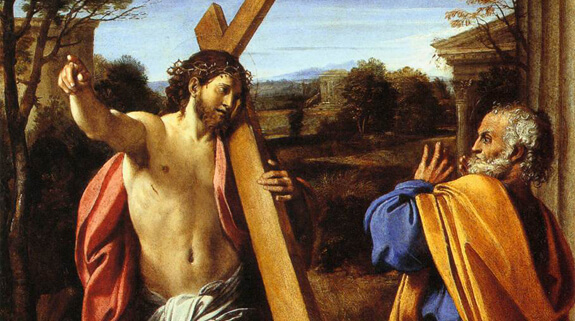
“To die to oneself, so that others may live.”
Seventeen years ago, during my seminary formation, I first encountered this saying: “to die, so that others may live.” Initially, its meaning eluded me. Did it imply physical death? Did it necessitate self-harm? Perhaps my struggle arose from not fully grasping its profound beauty.
Today, in the Gospel reading, we hear the words of our Lord: “Whoever wishes to come after me must deny himself, take up his cross, and follow me.” These words encapsulate the essence of this saying.
Self-denial. Jesus himself exemplifies this through his life. It can be seen as embracing victimhood—an act of detachment from worldly allurements, offering oneself for God’s glory and the salvation of souls. We are all called to be like Jesus, who denied himself in the garden’s agony, offering his life for us. However, we have to be careful because we are not called to replicate his crucifixion like what others are doing during Lent. Instead, we are invited to embrace suffering and to find the interior joy in victimhood, by detaching from worldly pleasures to behold the beauty of his sacrifice.
Today, our world offers unparalleled convenience. From food to communication, everything is at our fingertips. Technology dazzles us, but it can also blind us to life’s realities. Especially during the pandemic time, as restrictions keep us indoors, we risk losing touch with personal relationships and genuine encounters. This disconnect makes it harder to grasp the concepts of self-denial and victimhood.
By disconnecting from the digital world for a day and stepping into the streets, we might begin to see what I’m pointing out. Over-reliance on technology distances us from human connection and the truths of life. This distance hinders our understanding of self-denial and victimhood, disconnecting us not only from ourselves but also from life’s realities.
Self-denial begins when we acknowledge the collective “We” over the individual “I.” It involves recognizing others’ needs and sharing our abundance with those lacking.
Victimhood offers hope in our current crises. By embracing suffering, following Jesus’ example, we can transform our hardships into offerings to God. This sacrificial act helps us understand the deeper meaning of “taking up your cross.”
Taking up our cross means not only bearing our own burdens but also helping others carry theirs. As we do so, we must remember what Fulton Sheen wisely said: “You cannot have a Christ-less cross and a cross-less Christ.” Christ is with us in every trial, especially when we invite him into our suffering.
Following Jesus requires more than faith—it demands action. We cannot claim virtue while turning a blind eye to others’ needs. Through self-denial and carrying our crosses, we must act with compassion. Let us heed the words of Isaiah: “The Lord God opens my ear that I may hear,” listening to the cries of the oppressed, seeing the plight of the poor, and speaking truth with our words and actions.
In essence, Jesus calls us to deny ourselves so that others may live.


Leave a comment