
The Great “O Antiphons” are among the most beautiful and theologically rich elements of the Church’s liturgical tradition, sung during Vespers in the final days of Advent (December 17–23). These antiphons serve as a crescendo of anticipation as the faithful prepare for the coming of Christ at Christmas.
Historical Development
The “O Antiphons” date back to at least the 6th century and became an integral part of monastic life by the 8th century. Each antiphon begins with the exclamation “O” and invokes a prophetic title of the Messiah, rooted in Sacred Scripture, particularly the Old Testament.
In their original form, these antiphons were part of the Magnificat during Vespers, marking the Church’s heightened expectation of the Savior’s arrival. The titles reflect the Messianic prophecies and attributes of Christ, offering a sense of hope and fulfillment.
The Structure and Titles
The antiphons consist of seven invocations, each capturing a title for Christ:
- O Sapientia (Wisdom): Christ as Divine Wisdom who orders all things sweetly and mightily.
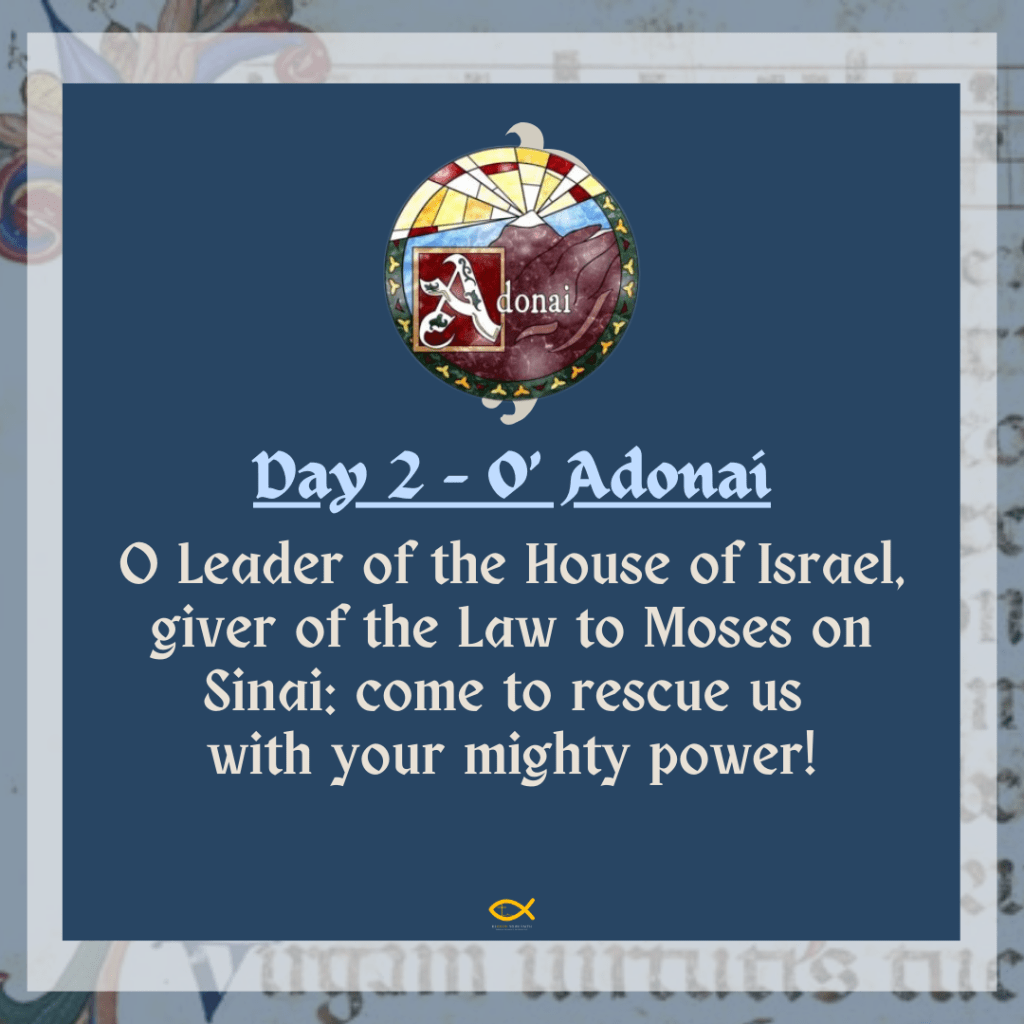
- O Adonai (Lord of Might): Christ as the Lawgiver and Redeemer of Israel.
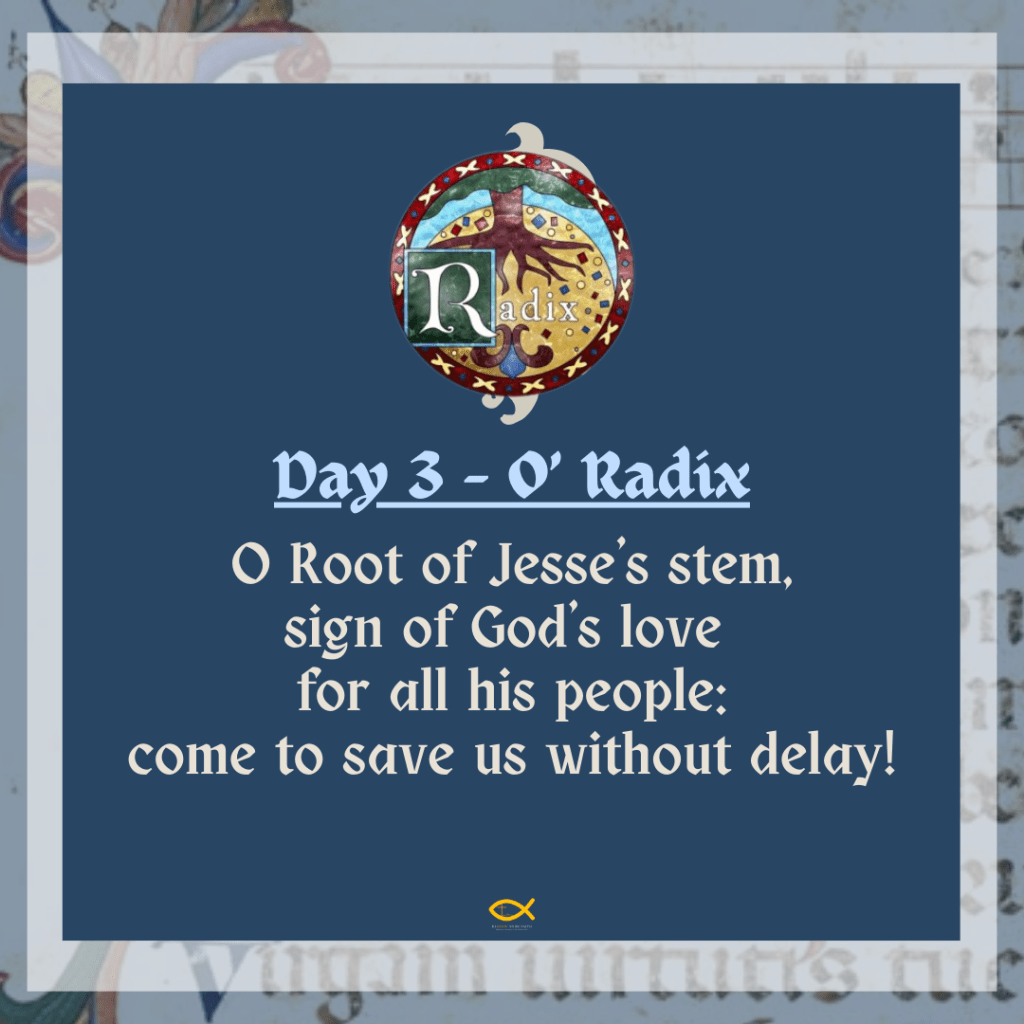
- O Radix Jesse (Root of Jesse): Christ as the shoot from the root of Jesse, fulfilling the Davidic covenant.
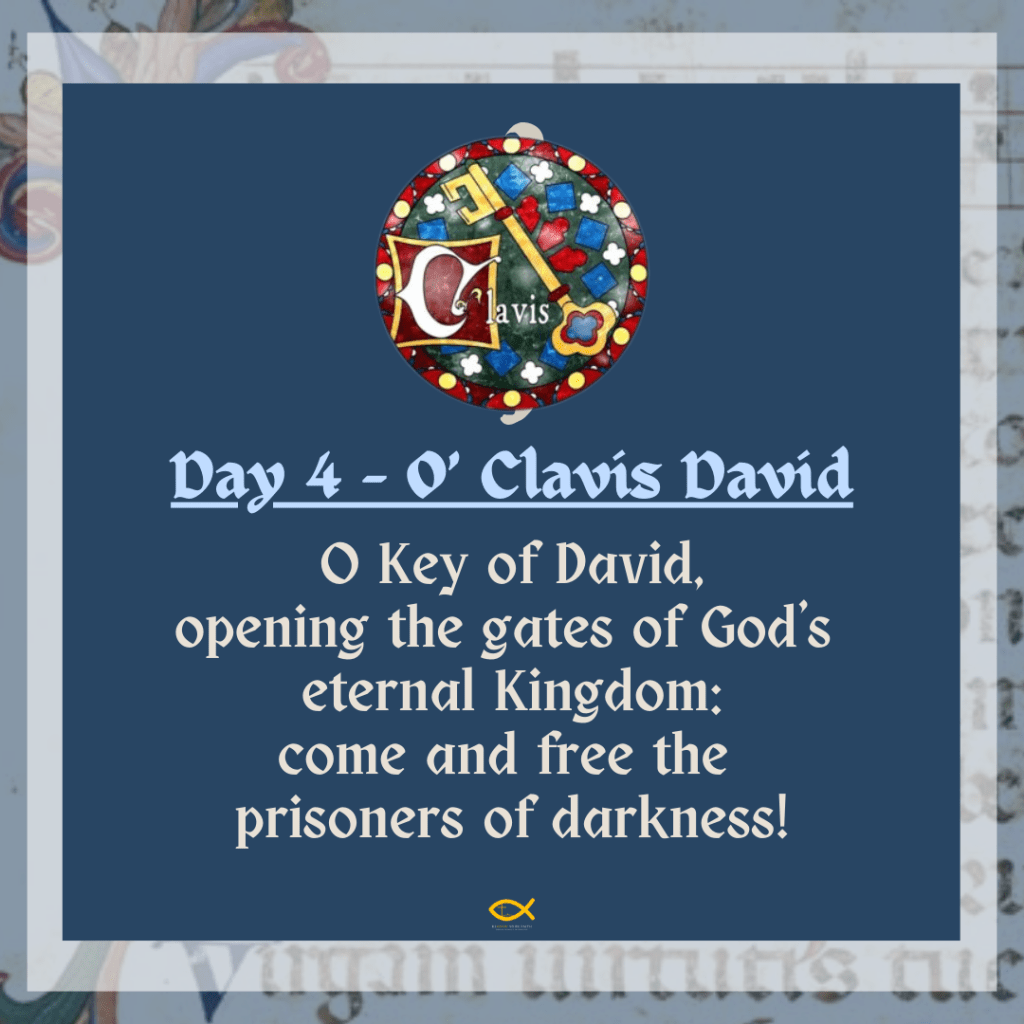
- O Clavis David (Key of David): Christ as the one who opens and closes the gates of salvation.
- O Oriens (Dayspring or Rising Sun): Christ as the Light that dispels darkness.
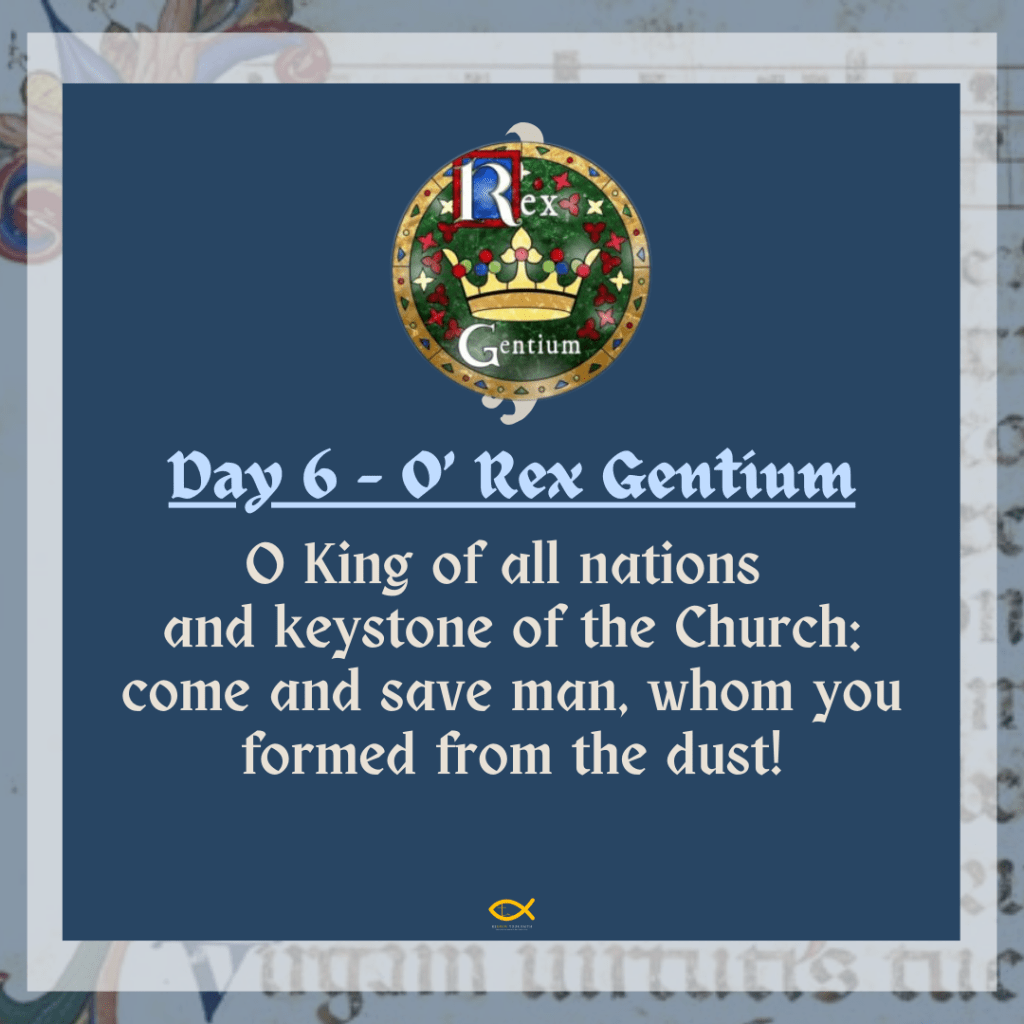
- O Rex Gentium (King of Nations): Christ as the King of all peoples, the cornerstone of unity.
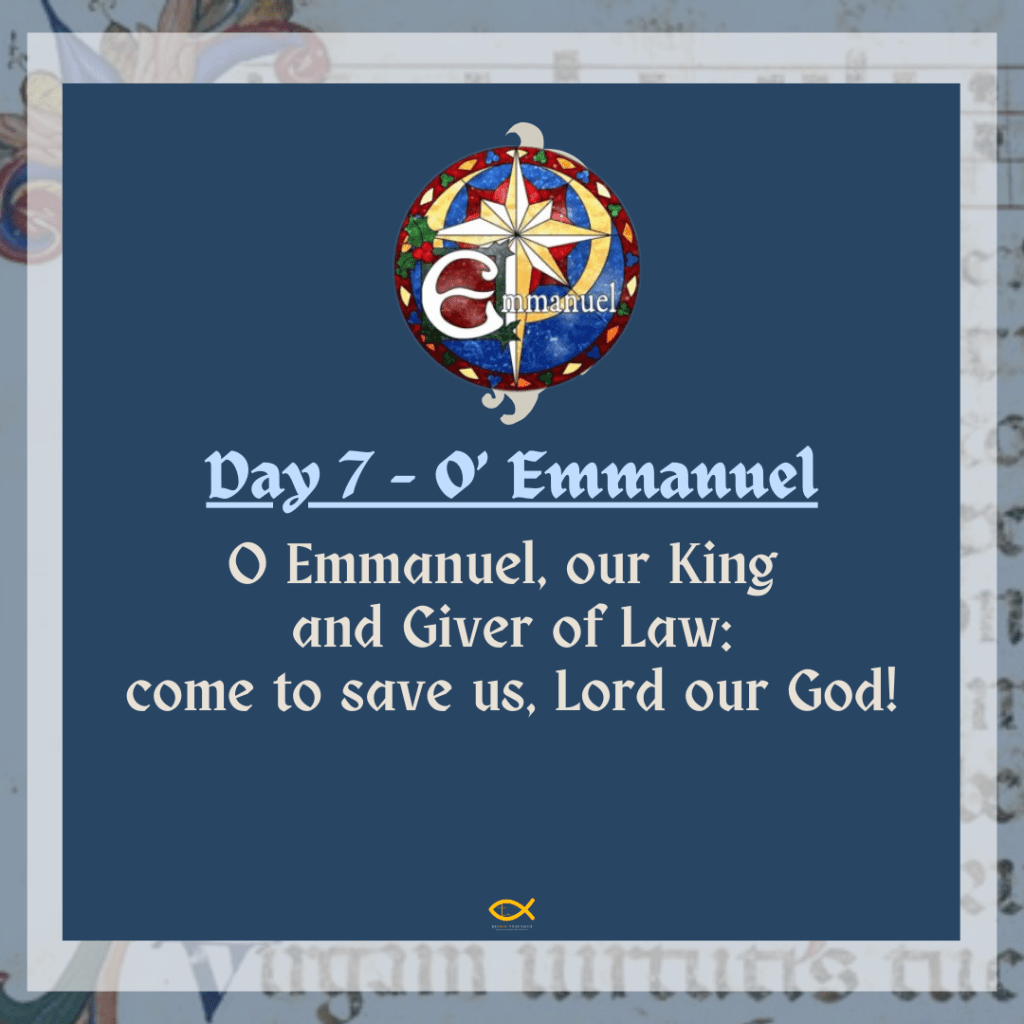
- O Emmanuel (God-with-us): The fulfillment of Isaiah’s prophecy of the coming of the incarnate God.


When the first letters of the titles are read in reverse order (S-A-R-C-O-R-E), they form the Latin acrostic ERO CRAS, meaning “Tomorrow, I will come.” This hidden message encapsulates the liturgical and eschatological thrust of Advent: the certainty of Christ’s coming to fulfill the longings of humanity.
Theology and Spiritual Reflection
The theology of the “O Antiphons” harmonizes Old Testament prophecy with New Testament fulfillment. They reflect Christ’s divine attributes and Messianic mission, emphasizing both His majesty and His closeness to humanity.
- Each antiphon embodies typology, wherein Christ fulfills figures and symbols of the Old Testament.
- The invocations convey profound eschatological hope, pointing not only to Christ’s first coming in Bethlehem but also to His second coming in glory.
- Through their poetic structure, the antiphons offer the faithful a spiritual ascent toward the joy of Christmas, intensifying the longing expressed in the repeated plea: “Veni!” (Come!)
In short, the Great “O Antiphons” are a masterpiece of liturgical prayer, blending biblical theology, historical tradition, and spiritual yearning into a powerful and prayerful crescendo as the Church prepares to celebrate the mystery of the Incarnation.


Leave a comment