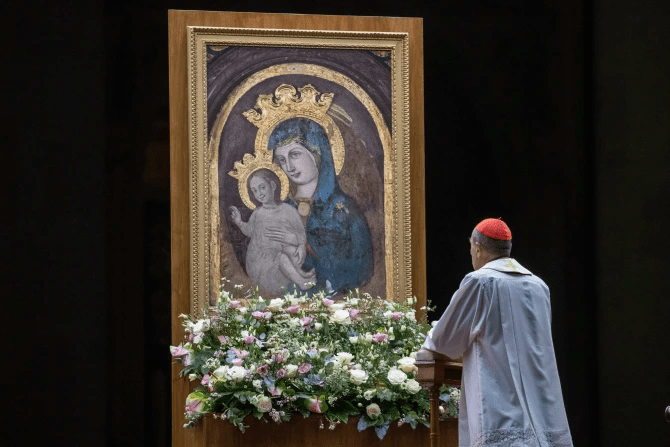
Disclaimer: I am writing this commentary in response to friends and former students who have asked about my position regarding the recent Doctrinal Note issued by the Dicastery for the Doctrine of the Faith (DDF) with the approval of the Holy Father, Pope Leo XIV entitled Mater Populi Fidelis: On Certain Marian Titles Regarding Mary’s Cooperation in the Work of Salvation.
The Church Cannot Defect from the Truth
The first thing to remember when reading any Church document is Christ’s promise that His Church will never be overcome by error:
“The gates of hell shall not prevail against it.”
— Matthew 16:18
This means that the Church as a whole can never formally teach error in matters essential to faith and morals when exercising her authentic Magisterium. However, individual persons, such as bishops, even popes, when speaking in a non-definitive or personal capacity, may err in prudential judgments, emphasis, or language.
When such confusion arises, divine grace and the structure of the Church provide safeguards for the faithful.
If this happens, what protects the Faithful?
It is Divine Providence and Good Faith.
If the faithful act in good faith, sincerely obeying what they believe to be the Church’s teaching — God does not hold them guilty for errors beyond their knowledge.
“He who knows his master’s will and does not do it will receive many blows; but the one who did not know it and did things deserving punishment will receive few.” — Luke 12:47–48
God judges us on obedience more than external confusion. Those who remain faithful to the Church in love and trust in Christ’s promises are protected by grace, even amid human shortcomings.
However, the Church today emphasizes being a Synodal Church — one that “journeys together” in faith and charity. Synodality calls for pastors and faithful alike to listen, discern, and walk together under the guidance of the Holy Spirit.
Thus, when the faithful raise sincere concerns about Church teachings or expressions, this should not be mistaken for rebellion. Rather, it reflects a deeper communal participation and responsibility to safeguard the truth in love.
At the same time, the faithful are called to maintain filial obedience and respect for the Magisterium and not breaking communion, even when questioning or seeking clarification about non-definitive teachings.
Nature of the Doctrinal Note
The recent DDF document is not a dogma but an exercise of the ordinary Magisterium.
That means: It was issued with papal approval and carries official magisterial authority.
It is, however, non-infallible, since it does not define any new dogma but provides only a doctrinal clarification and guidance.
As such, it requires what the Church calls “religious submission of intellect and will” (cf. Lumen Gentium 25). This means:
- The faithful should accept its doctrinal principles (e.g., proper use of Marian titles) with sincere respect.
- They should remain in communion with the Church, even if they find difficulty or ambiguity in certain expressions.
Unlike a dogma (de fide), this teaching allows legitimate theological discussion within the bounds of respect and fidelity.
What the Note Means in Practice
The DDF clarifies that the title “Co-Redemptrix” should not be used to define Mary’s cooperation in salvation, since it may cause confusion by appearing to place her on equal footing with Christ.
This does not mean that the title is formally prohibited or heretical, but only that its use requires caution and proper theological explanation.
Reflection
In my opinion, the DDF could have exercised greater prudence in stating that it is “always inappropriate” to use the title Co-Redemptrix. The Church Fathers, doctors of the Church, and many Saints, and even popes before Francis have used this title with deep theological meaning.
If those holy teachers used the term devoutly, can we now say their expressions were “always inappropriate”?
Moreover, the document would have been strengthened by citing earlier magisterial and patristic sources supporting Mary’s unique cooperation in redemption, rather than primarily referencing recent papal reservations such as of Pope Francis. Also for instance, Cardinal Ratzinger (later Benedict XVI) did not reject the concept but simply warned that the term might lead to misunderstanding if detached from its proper Christological context.
On Mary’s Role: With and Beneath Christ
True Catholics know well that Mary is not worshipped, nor part of the Holy Trinity. She possesses no power to bestow grace on her own. All her cooperation in salvation is “with and beneath Christ” (cum et sub Christo) — never apart from Him.
As Ad Diem Illum Laetissimum of Pope St. Pius X teaches:
“The most Blessed Virgin Mary was inseparably joined with Christ in accomplishing the work of man’s redemption.”
The faithful, therefore, should not be confused. Mary’s role is unique, subordinate, and entirely dependent on Christ, yet it remains real and profound in the mystery of salvation.
A Pastoral Concern
It appears the DDF’s concern is less about the doctrine itself and more about its pastoral and ecumenical implications — particularly the misunderstanding it may create among non-Catholics and nominal Catholics. While this intention is charitable, it should not come at the expense of diminishing a long-standing Marian devotion rooted in Scripture, Tradition, and the teaching of the saints.
As Catholics, we affirm that the Church — founded by Christ through the Apostles — is the sole guardian of revealed truth. Among those truths is Mary’s singular participation in the work of redemption, united perfectly to her Son.
The Right to Seek Clarification
To question or seek clarification from Church leaders is not rebellion but an act of fidelity. When the piety of the faithful is dismissed without sufficient theological grounding, the Church must respond with depth, not mere caution.
For decades, the faithful have awaited a definitive theological resolution on these Marian titles. Yet the DDF continues to describe them only as “inappropriate” or “not helpful,” without engaging fully the Scriptural and patristic evidence supporting them.
The recent note does not forbid the faithful from honoring Mary as Co-Redemptrix or Mediatrix of All Graces when properly understood. It simply warns against misuse or theological confusion.
Thus, if one holds — as the Church Fathers, saints, and previous popes did — that Mary cooperated with and beneath Christ in the redemption of the world, this remains both orthodox and praiseworthy.
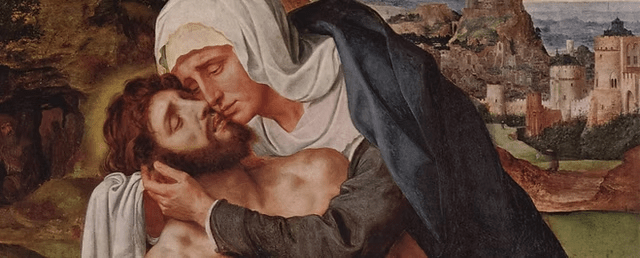
At the end of the day, the Blessed Virgin Mary, the Mother of God, remains what she has always been: the humble handmaid who shared most intimately in her Son’s redemptive suffering — truly our Mother, Mediatrix, and Co-Redemptrix in Christ.
Br. Karlo Cruz Garcia / 08112025


Leave a comment